Current threats to nēnē

Nēnē were federally downlisted from endangered to threatened in 2019. The species is still state-endangered under HRS 195D, and every population depends on ongoing predator control. The 2024 USFWS 5-year review kept the federal status where it was and flagged cat-borne toxoplasmosis as an elevated threat. Three pressures drive most of the documented mortality.
Vehicle Collisions

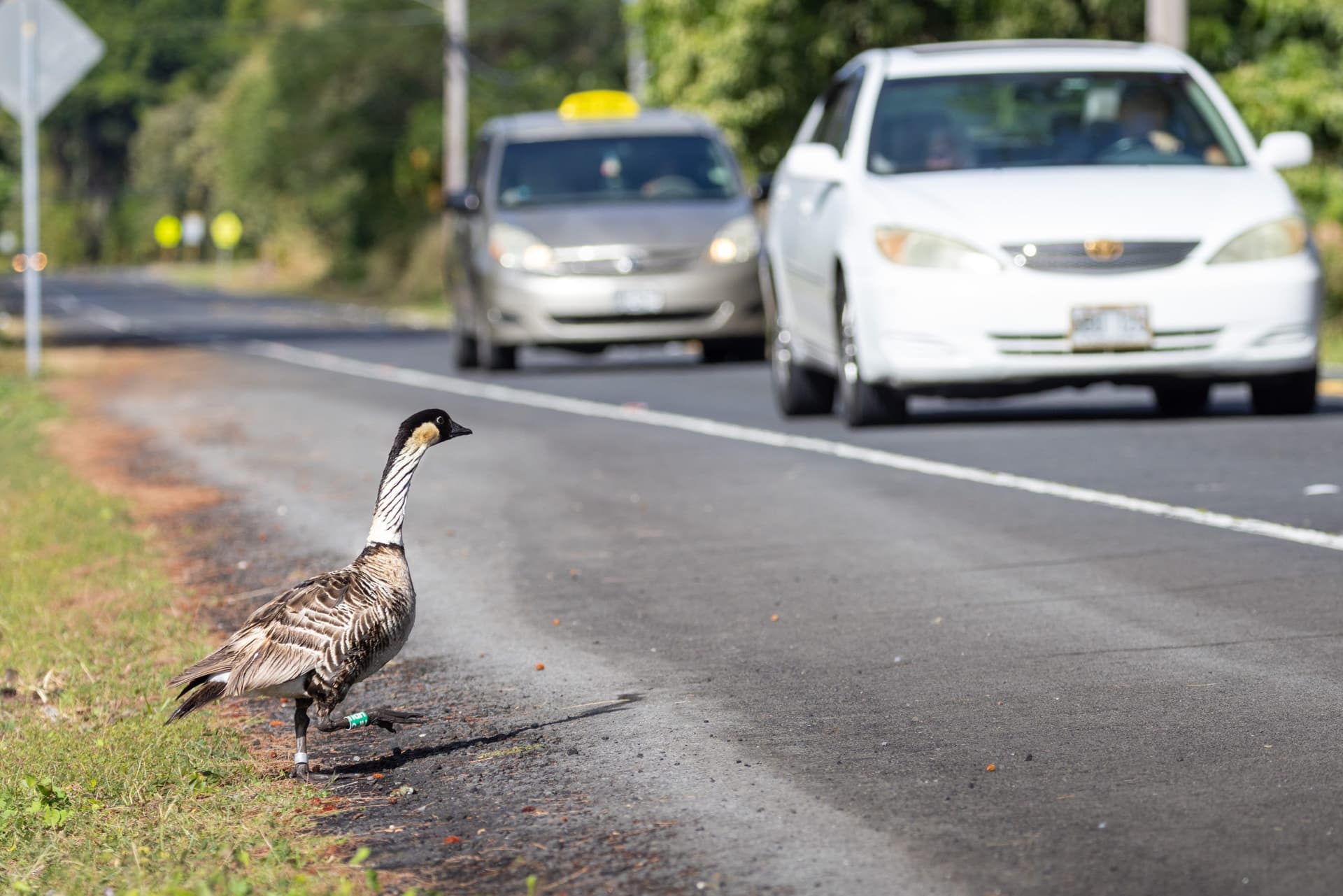
Vehicle Collisions

Lepczyk 2019 pulled 38 years of road-kill records from Hawaiʻi Volcanoes and found 92 nēnē killed by vehicles between 1977 and 2014. The deaths cluster on three road segments and peak in November as breeding starts.

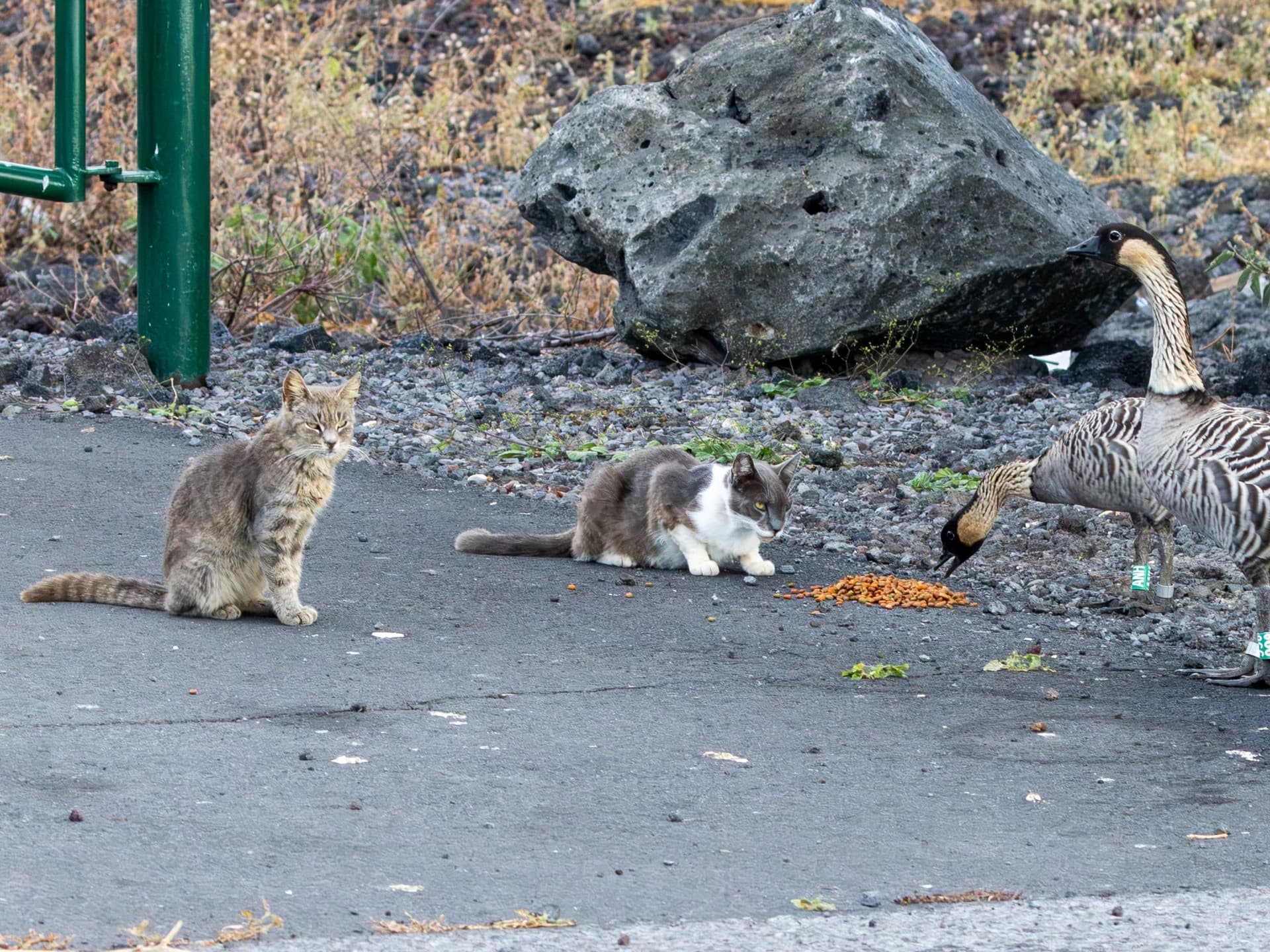
Feral Cats

Feral Cats

Cats are the only host where Toxoplasma gondii can complete its life cycle, and toxoplasmosis is the most common infectious disease in nēnē. Seroprevalence hits 48 percent on Molokaʻi, where the population is down to six birds.

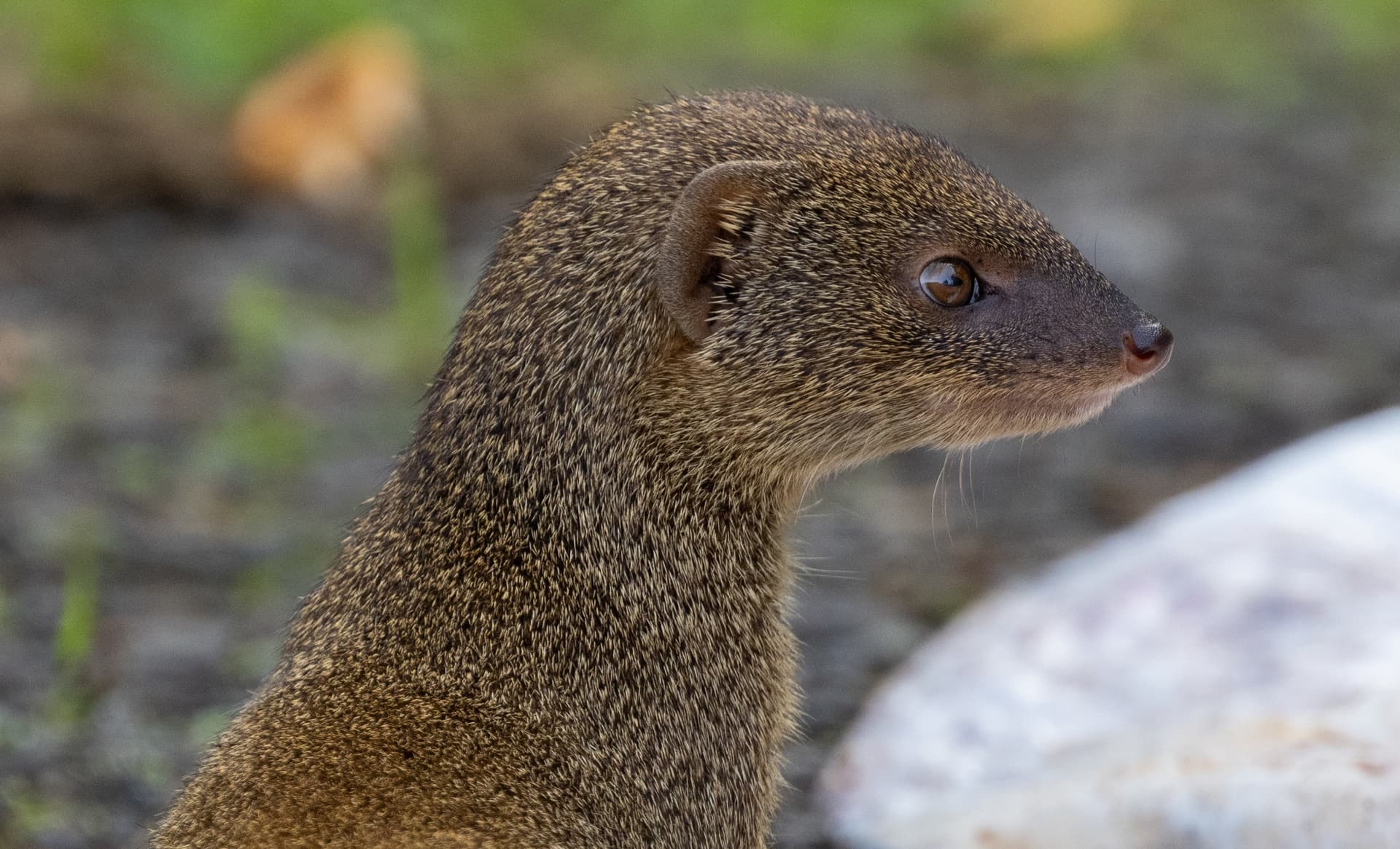
Mongoose

Mongoose

One mongoose shipment was thrown overboard in Kauaʻi harbor in 1883. That accident is the reason Kauaʻi now holds about 62 percent of the species. Keeping the island mongoose-free is the load-bearing piece of nēnē recovery.

About Us
Projects
Donate
Terms of UsePrivacy Policy
FacebookInstagramX

© 2026 nēnē.org. All rights reserved.