Fund the field work
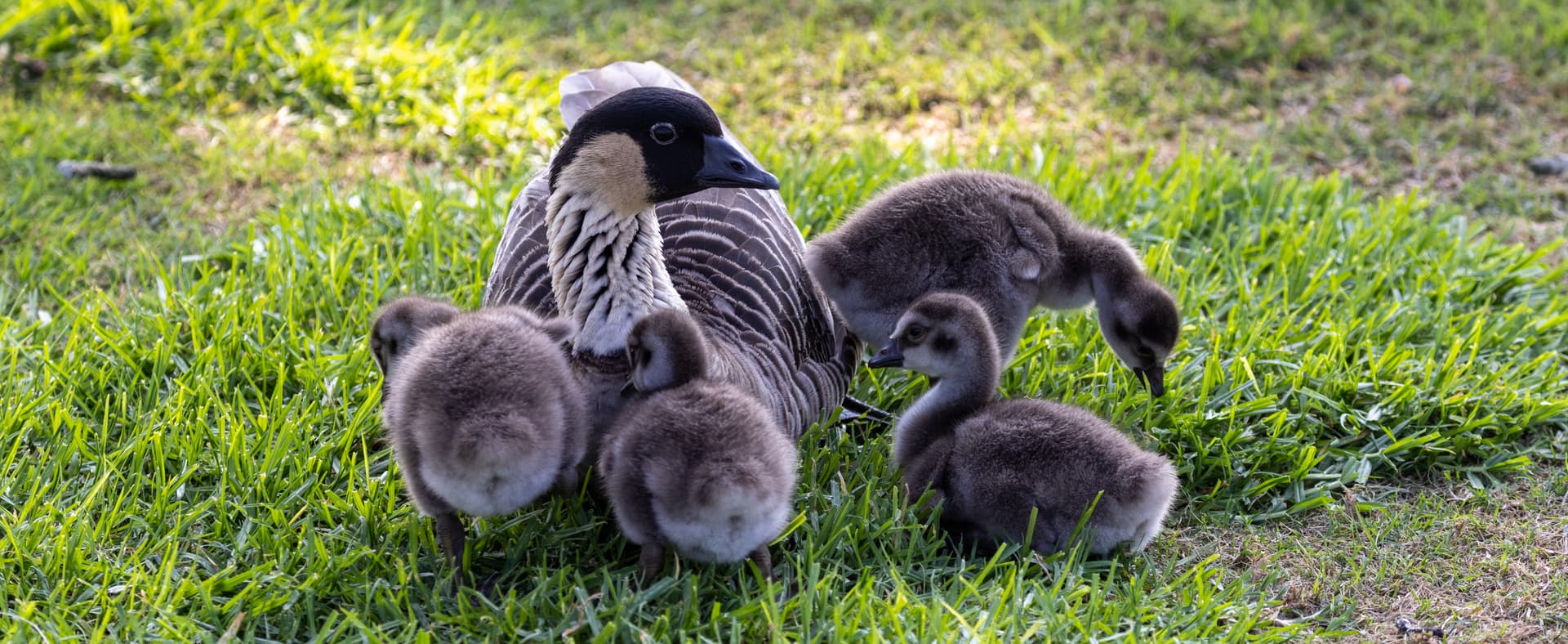
Nēnē went from about 30 birds in 1949 to roughly 4,300 today (NRAG 2025 count). That recovery does not coast. It runs on predator traps, band-resight surveys, and people who count birds in the rain. Your donation pays for that work.
Where the money goes
Three line items eat most of the budget. Here they are.
Predator control
Mongoose, rats, and cats account for most documented nest loss outside Kauaʻi. Trapping is the slow, expensive work that keeps nests viable.
Remote monitoring
Cameras read band codes and acoustic units pick up nēnē calls in places we can't get to every week. Each unit replaces dozens of foot-survey hours.
CatMap
A community mapping tool for feral and free-roaming cats. Cats are a documented nēnē mortality source, both by direct predation and by toxoplasmosis transmission.
How donations break out
Since 2023, more than 80% of donations have gone into predator control inside nēnē habitat. That work has produced 1,131 mongoose removed and a measurable drop in nest predation pressure on the lines we run.
Make a donation
Pick a tier or type in your own number. We track what each dollar funds and report it back in our updates.
Pick an amount
What this pays for
- Field hours, fuel, traps, and cameras across active sites.
- Since 2023, more than 80% of donations have gone into predator control in nēnē habitat. 1,131 mongoose removed so far.
How often?
Monthly gifts keep traplines and cameras running year-round.
Pick an amount above to continue.
Other ways to chip in
Adopt a banded bird, mail a check, buy a shirt, or back us on Patreon. Pick whichever feels right.
Adopt a nēnē
Get paired with one banded bird and follow its sightings. Monthly support starts at $10. A lifetime adoption is $500 and comes with naming rights.
Mail a check
Prefer paper? Make it out to Nēnē Research & Conservation and mail it to:
P.O Box 1899
Keaau, HI 96749
Shop merch
Shirts, stickers, and totes designed in-house. Margin from the shop goes into the same field budget as donations.
Join Patreon
Patrons get monthly video field updates and patron-only merch. About as close to riding along on a survey day as you can get from your couch.
Frequently asked questions
The ones we get most often.
Is my donation tax-deductible?
Yes. Nēnē.org operates under Nēnē Research & Conservation, a 501(c)(3). Your donation is deductible to the extent the law allows.
How is my donation used?
Roughly: trapping and predator control in nesting areas, trail cameras, fuel and field time for band-resight monitoring, and the database all of it feeds into. Toxoplasmosis from cats and vehicle strikes are documented mortality sources, so a lot of the work points right at those two.
Can I direct my donation to a specific project?
Yes. Email us before you give, or include a note with a mailed check, and we will route the money to that line item. Common ones: Kauaʻi mongoose biosecurity, road-mitigation signage on Hawaiʻi Island, remote camera deployment.
How do I cancel my monthly donation?
Log in and cancel from your account, or email contact@nene.org and we will handle it the same day. No exit interview, no guilt trip.
Will my name be published as a donor?
Not unless you ask us to. We only list donors who opt in. Tell us when you give if you want your name on the supporters page.
One more pass
The climb from 30 birds is real, and it is also fragile. Kauaʻi carries most of the statewide population because it is the one main island still mongoose-free. Holding that line costs money.