Predator Control
Mongoose, cat, and rat removal at nēnē nesting habitat on Hawaiʻi Island. Game cameras show us what is moving through. Trap nights and nest outcomes tell us whether any of it is working.
What this project does
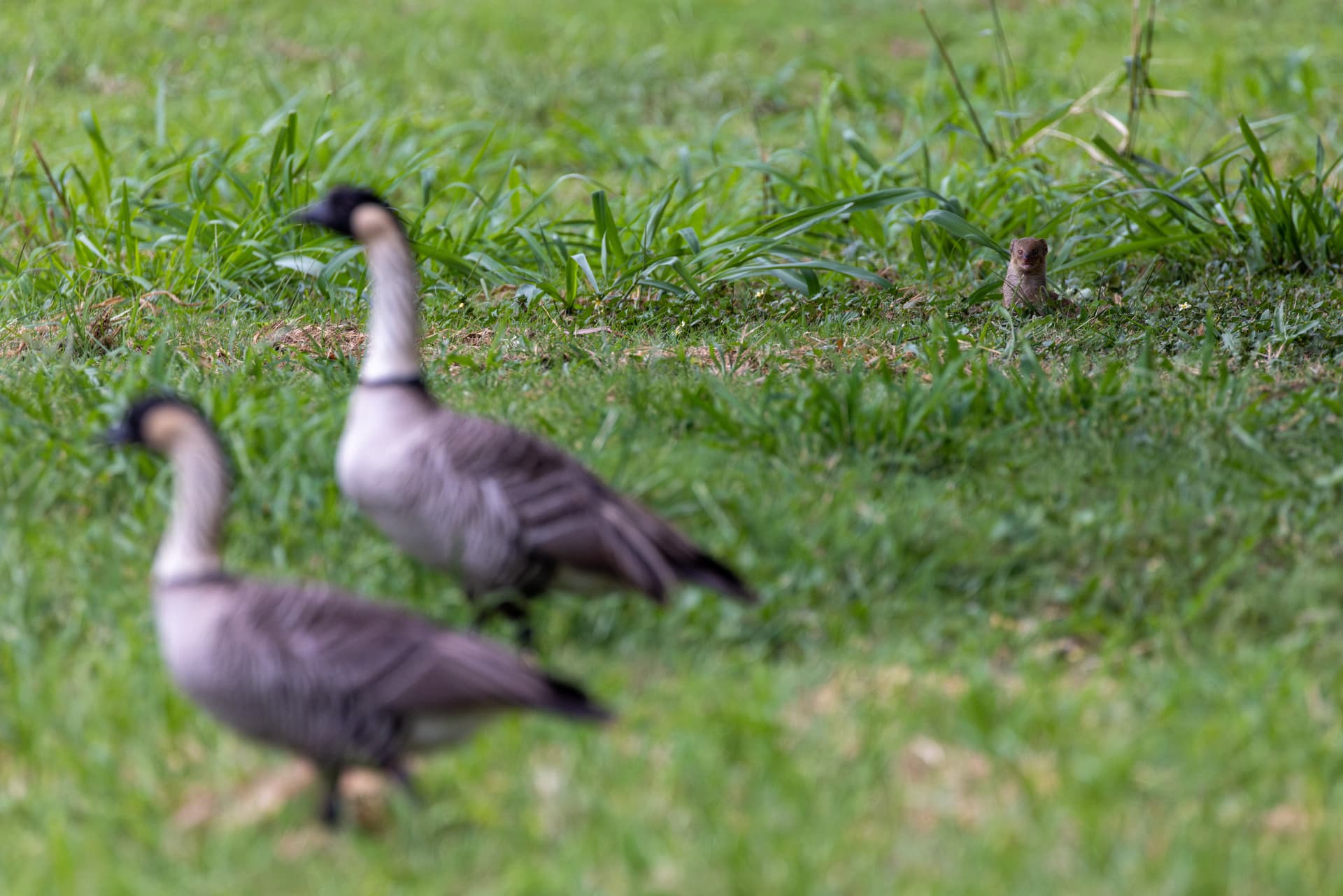
Mammalian predation is the dominant threat to nēnē. The 2019 federal downlisting rule and the 2024 5-Year Review both name mongoose, feral cats, dogs, rats, and pigs. This project is the on-the-ground response at nēnē nesting habitat on Hawaiʻi Island: traps in the ground, game cameras to see what is moving through, and enough record-keeping to know whether any of it changes what a gosling runs into.
Kauaʻi has cats, dogs, rats, and pigs like everywhere else. What it does not have is mongoose, and that is most of why Kauaʻi holds around 2,643 nēnē as of 2025 and the other islands do not. The job there is keeping mongoose out, not taking them out.
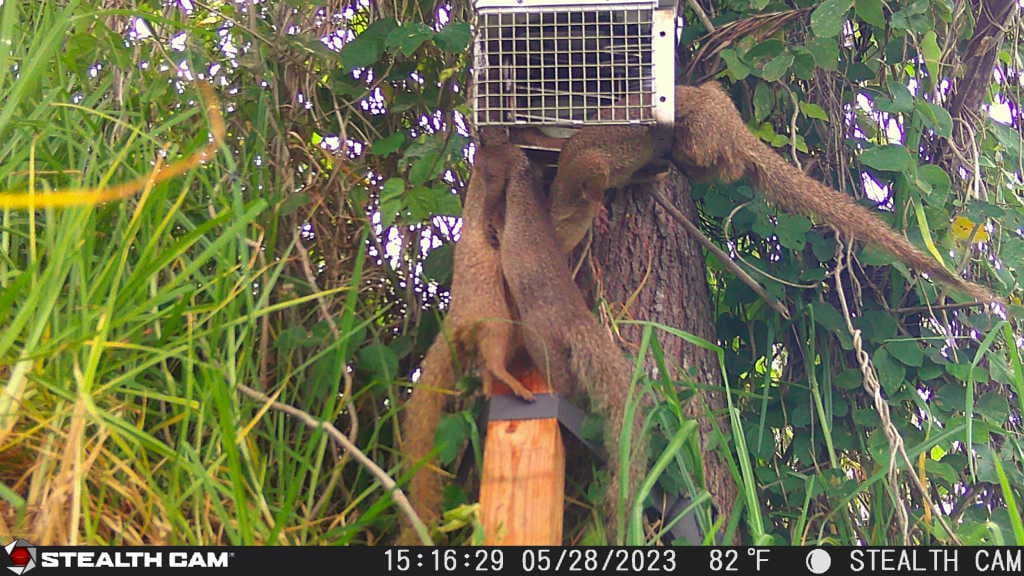
Over 45,000 game camera images have gone through a species-ID model so far. What shows up in them decides where the next traps go.
The pieces
Nesting habitat coverage
Trap lines and camera grids follow the nesting areas, which are rarely the easy ones to reach.
Camera-based monitoring
Game cameras and a trained model log what moves through each site, so predator pressure comes back as a count.
Iterating on what works
Trap type, bait, and placement get adjusted based on what the cameras and trap nights are showing.
Community trapping
Trained volunteers running their own lines, with support for trap selection and reporting.
What is in the field
Trap types
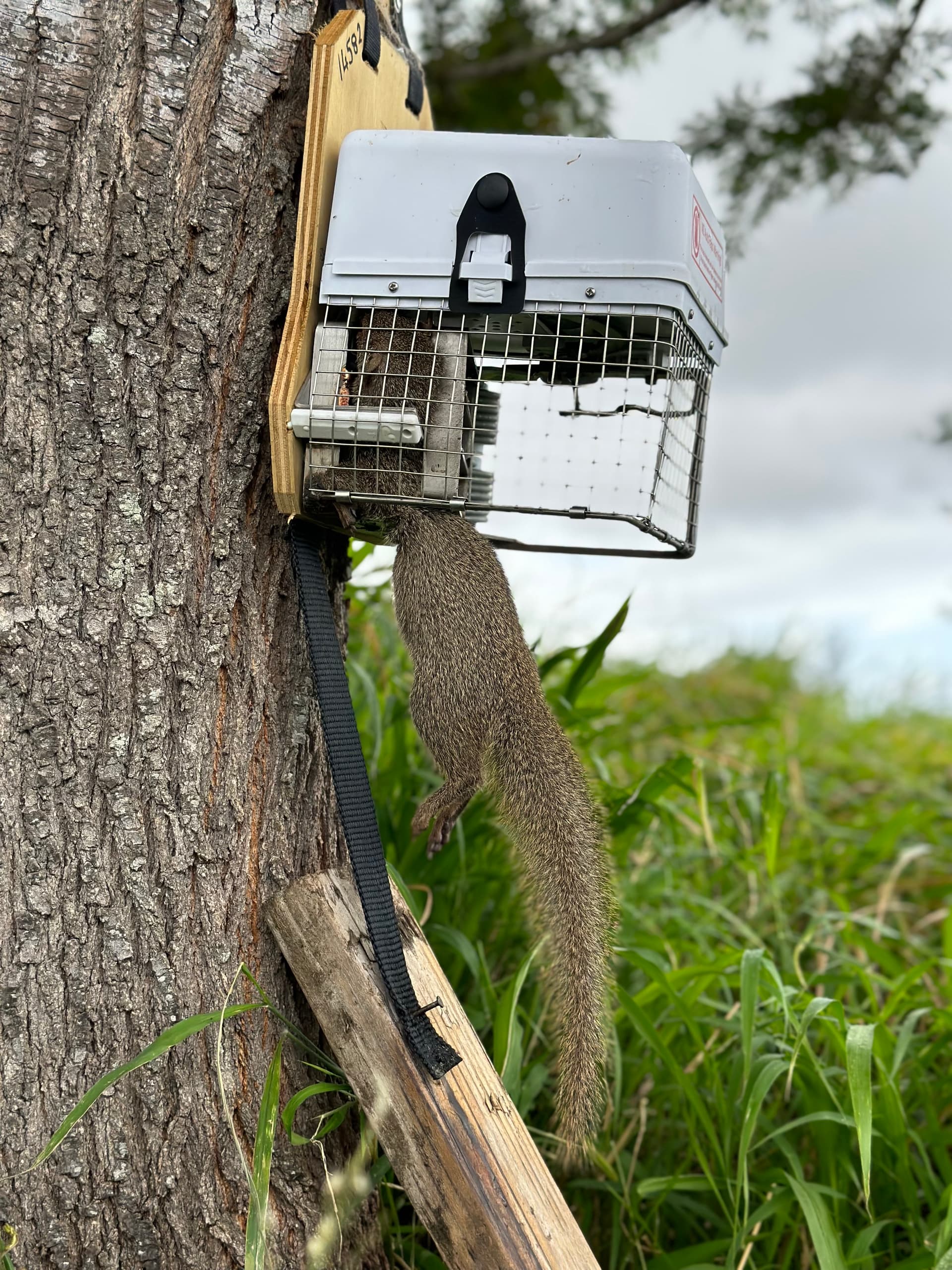
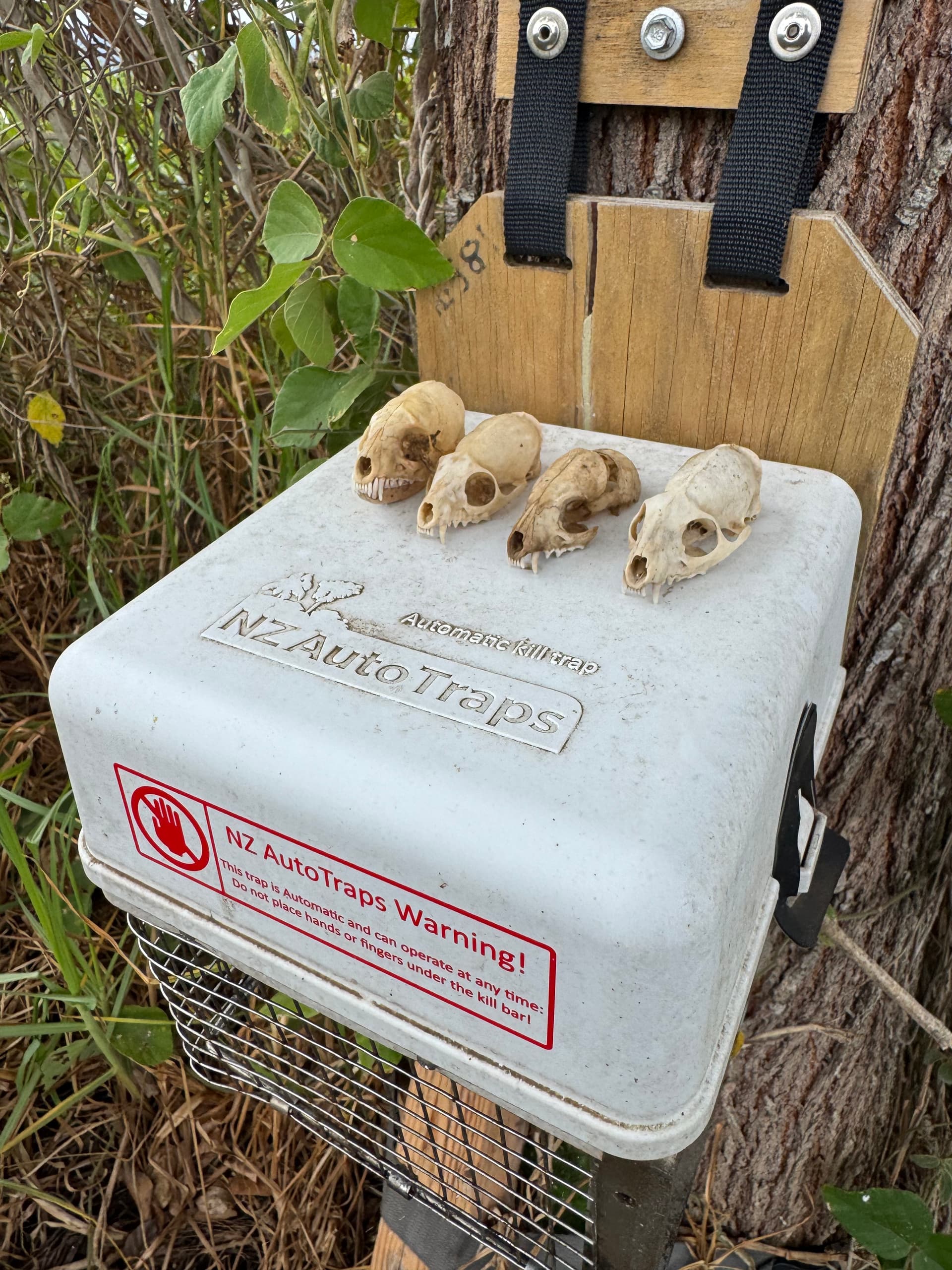
AT220 auto-resetting traps for mongoose, Goodnature A18 and A24 self-resetting traps, plus live traps where the situation calls for them.
Game cameras
A grid of cameras covering active and historical nesting areas. Over 45,000 images processed through a trained classifier.
Outcome tracking
Cameras and carcass counts on the predator side. Nest success and gosling survival on the nēnē side.
Adjustments
Trap locations and bait change when the cameras and catch rates say to.
Two scoreboards
Removals are one measure. Whether more goslings fledge is the one that matters.
Volunteer support
Equipment, training, and a place to log catches for community members running their own trapping lines.
How it works
1. See what is there
Game cameras run continuously across nēnē nesting habitat. The image stream goes through a classifier that flags mongoose, cats, rats, and feral pigs. Nobody wants to be the person eyeballing thousands of empty frames.
2. Place traps where the data says
AT220 mongoose traps, Goodnature A18 and A24 self-resetting traps, and live traps go where the cameras and previous catches point. The HCSU technical report on Hawaiʻi Island documented male feral cat home ranges up to 2,050 ha. At that range size, trapping right at a single nest fails. Trap lines have to cover a buffer.
3. Track outcomes on both sides
Removals and trap nights on one side. Nest success and gosling survival on the other. The HCSU report on Hawaiʻi Island documented an endangered ʻuaʻu (Hawaiian petrel) recovered from a feral cat stomach. For goslings the predator and the habitat are the same.
4. Pull in community reports
Sightings logged on FeralMap feed back into where we look next. Mongoose reports on Kauaʻi go to biosecurity. Mongoose and cat reports on other islands help us catch pressure outside the current camera footprint.
Operational numbers
Why this matters
The 2019 federal downlisting rule (84 FR 69918) put nest success on Kauaʻi, which has no mongoose, at 75 percent on private lands and 82 percent on the Kauaʻi NWR Complex, against 62 percent at Haleakalā and 58 percent at Hawaiʻi Volcanoes. The rule is careful to say the data are limited and that mongoose may be the most significant predator off Kauaʻi, and the underlying estimates are unpublished. It is a gap worth taking seriously, not a settled number. Removing mongoose from nēnē nesting habitat on Hawaiʻi Island is one of the few levers we have on it.
Cats add a second pathway. They prey on goslings and they shed Toxoplasma gondii, the parasite behind toxoplasmosis, which is the most common infectious disease diagnosed in nēnē. Exposure ran 21 percent on Kauaʻi, 23 percent on Maui, and 48 percent on Molokaʻi in the sampled birds (Work et al. 2016). Rats prey on eggs and very young goslings. Those three predators are what the control program is built around.
Removal counts are not the success metric on their own. Whether nēnē fledge more goslings is.
Get involved
Sign up for updates on training, workshops, and volunteer trapping.
Report sightings
Mongoose, cats, and other invasive animals go on FeralMap. Reports get routed to the right agency by species and island.
Visit FeralMap.com