Kilo
An iOS field tool for nēnē managers. Banding records, sightings, and injury reports in one place so the person finding a hurt bird and the person who banded it are working off the same record.
Beta access
Kilo is in beta with members of the Nēnē Recovery Action Group (NRAG). NRAG members already manage these birds in the field, so they are the ones shaping the workflow before anything goes wider.
What Kilo does
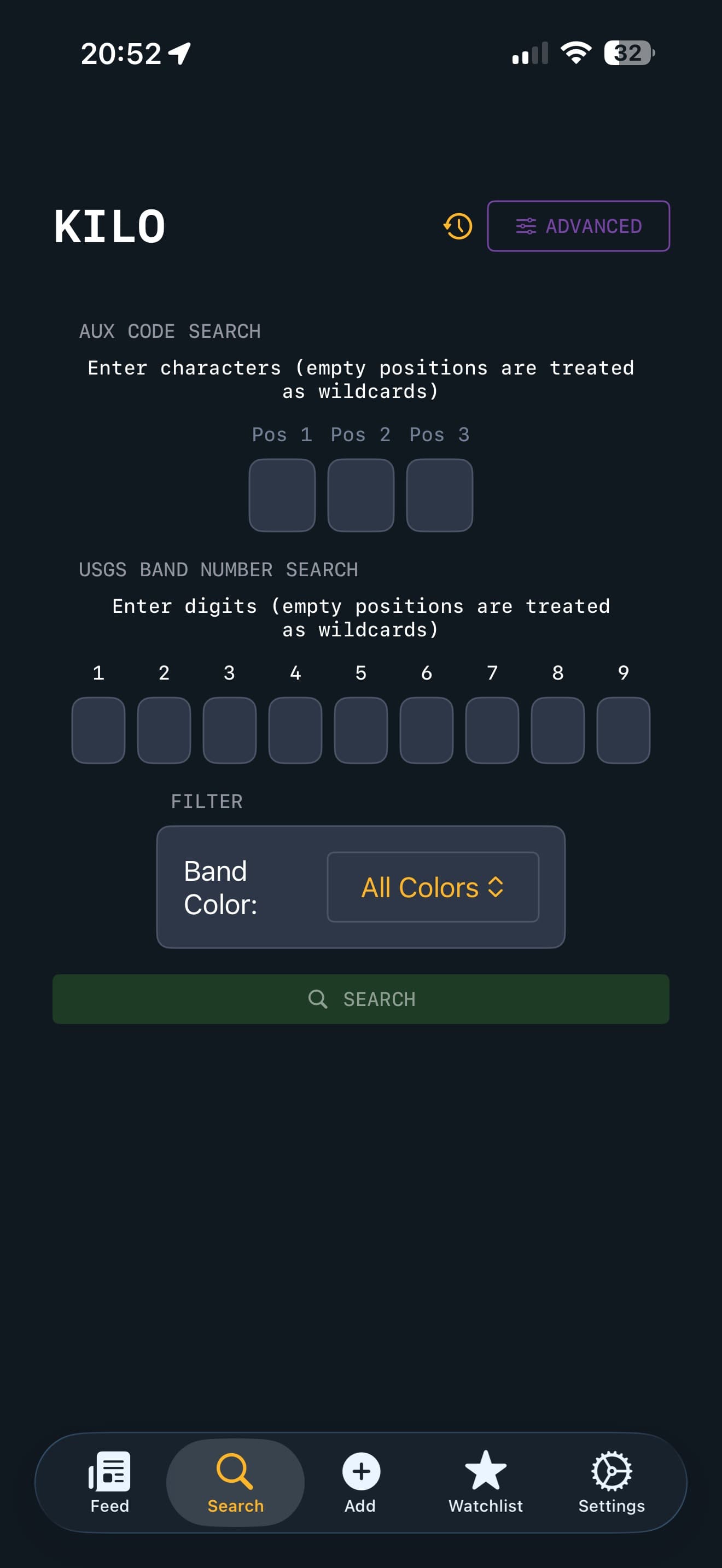
Nēnē banding, sighting, injury, and mortality records have historically lived in separate spreadsheets, separate databases, and separate inboxes. When someone finds an injured banded bird, the band number often does not resolve to a full history without phone calls. Kilo pulls those records together so the bird's life history is on screen the moment the band is read.
In the field
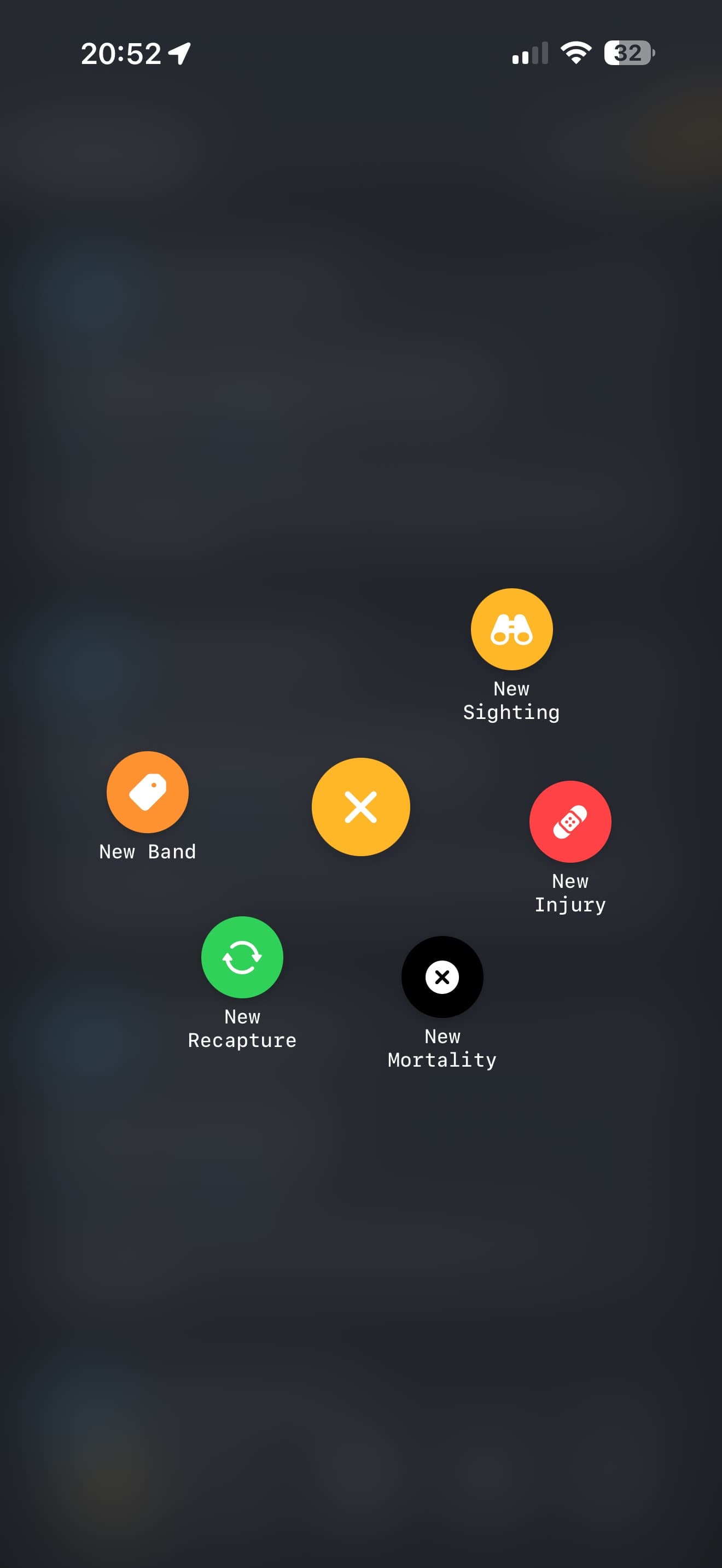
Injury reporting from the field
Photo, GPS, and band number captured on the spot. The report reaches managers and rehabbers without waiting for someone to type it up back at the truck.
One record per bird
Each banded bird has a timeline. Sightings, injuries, treatments, releases. Whoever opens the record sees the same history.
Movement view
Sighting locations over time make altitudinal movement and habitat shifts visible without compiling a separate dataset.
Offline by default
Most nēnē habitat has bad cell service. The app records locally and syncs once signal returns, no fiddling required.
The problem this solves
Before Kilo, an injured banded bird could sit in a rehab facility while the band number got passed around through email, phone, and paper. The same bird's last GPS location might be in someone's notebook. Sightings logged by partner organizations rarely made it back to the managers responsible for that population. None of that is a failure of the people doing the work. It is a failure of the tooling.
Kilo replaces that with one record per bird, a shared map, and a reporting flow that works when you are standing in a pasture with a hurt nēnē in front of you.
Also in there
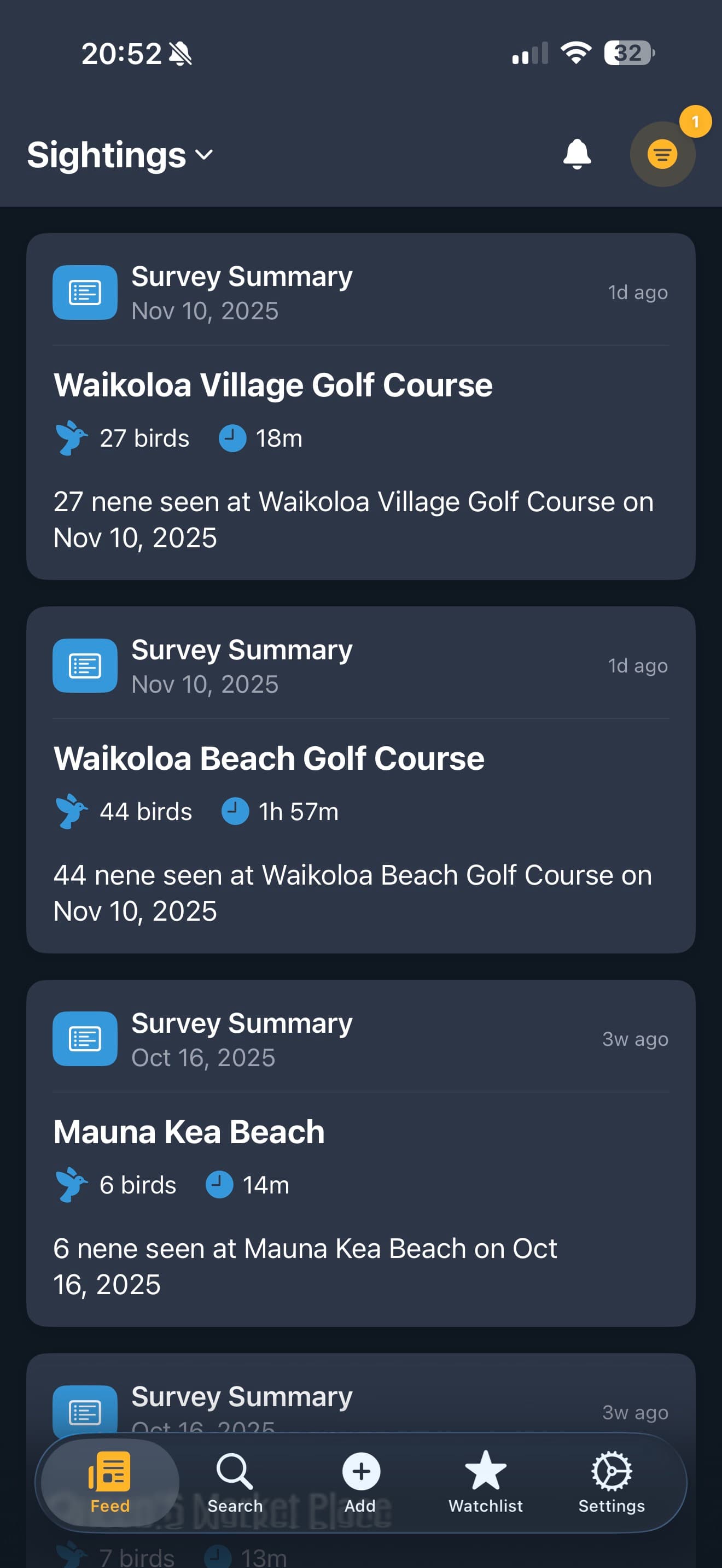
Feed of notable events
Surfaces birds that have not been seen in a while, large movements, location changes, and rehab releases without needing to dig through records.
Watchlist
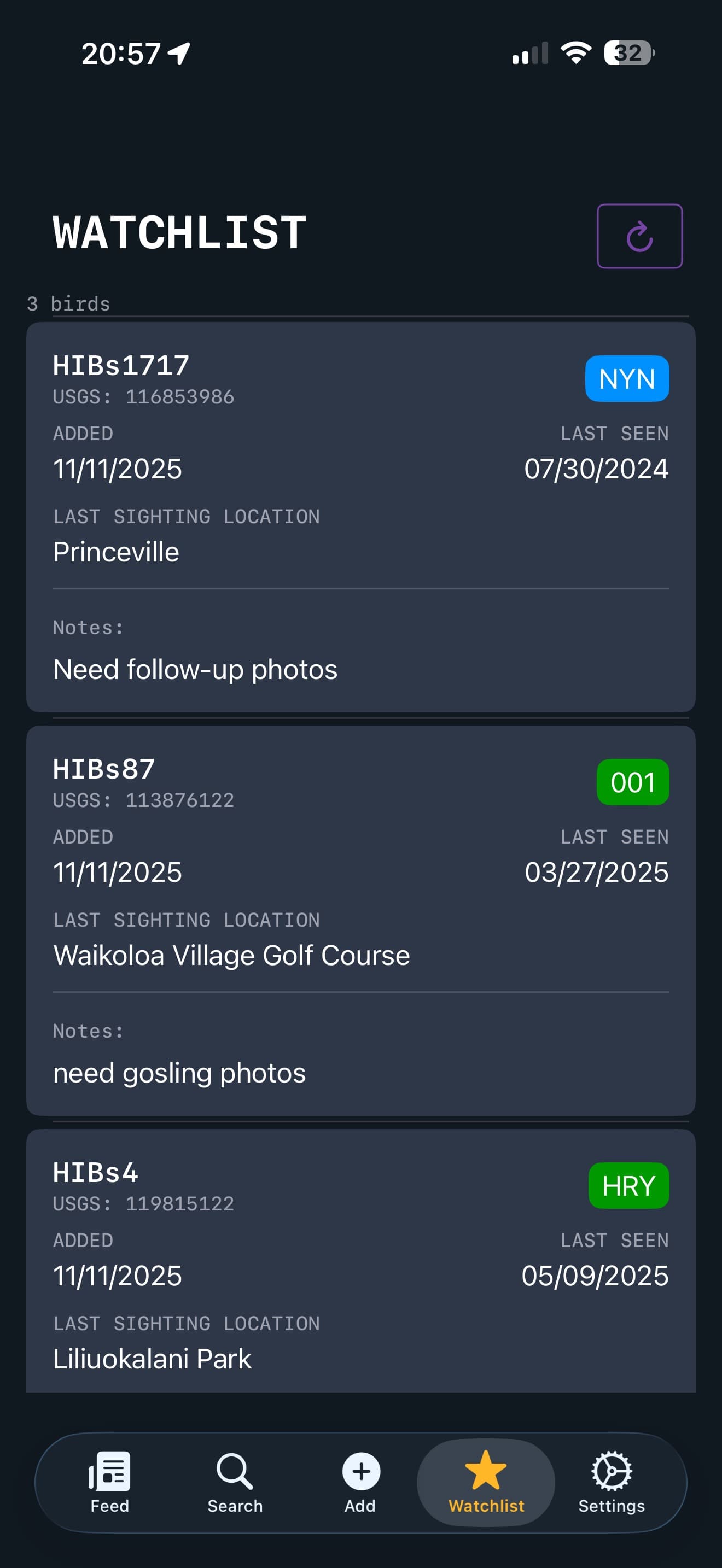
Flag specific birds (rehab releases, breeding pairs, individuals of concern) and get notified when something happens to them.
Photo attachments
Multiple photos per sighting or injury record, cached locally so the report goes out fully when offline.
Role-based access
Managers, partners, contributors, and supporters each see what they need to see. Sensitive nest locations stay restricted.
Why this matters
Nēnē are conservation-reliant. Federal status moved from endangered to threatened in 2019, but state status remains endangered, and every island still depends on ongoing management. Maui dropped from 627 birds in 2017 to 338 in 2022 and has climbed back to 580 (NRAG). Molokaʻi went from 37 to 6 over the same stretch and counted 30 in 2025. Swings like that are what you want in the records before somebody notices them in the field.
Kilo does not fix any of that. It just means the record is in one place when somebody needs it.
Built for the field
Offline-first. Large buttons and high contrast for outdoor use. Short forms designed for one-handed phone use. Automatic GPS capture, so nobody is squinting at coordinates in the field.
Timestamps in Hawaiʻi Standard Time. Hawaiian place names. Sensitive records like nest locations and gosling counts sit behind role-based access.
Screenshots
Project status
Tech stack
- Native iOS (Swift)
- Supabase Backend
- Real-Time Sync
- Offline-First Architecture
- GPS Integration
- Biometric Auth
On the roadmap
- Android version in development
- Web dashboard for managers
- Analytics layer for population trends
- Automated alerts for watchlisted birds